Tableside vs MarketMan: True Cost Comparison for Restaurants (2026)
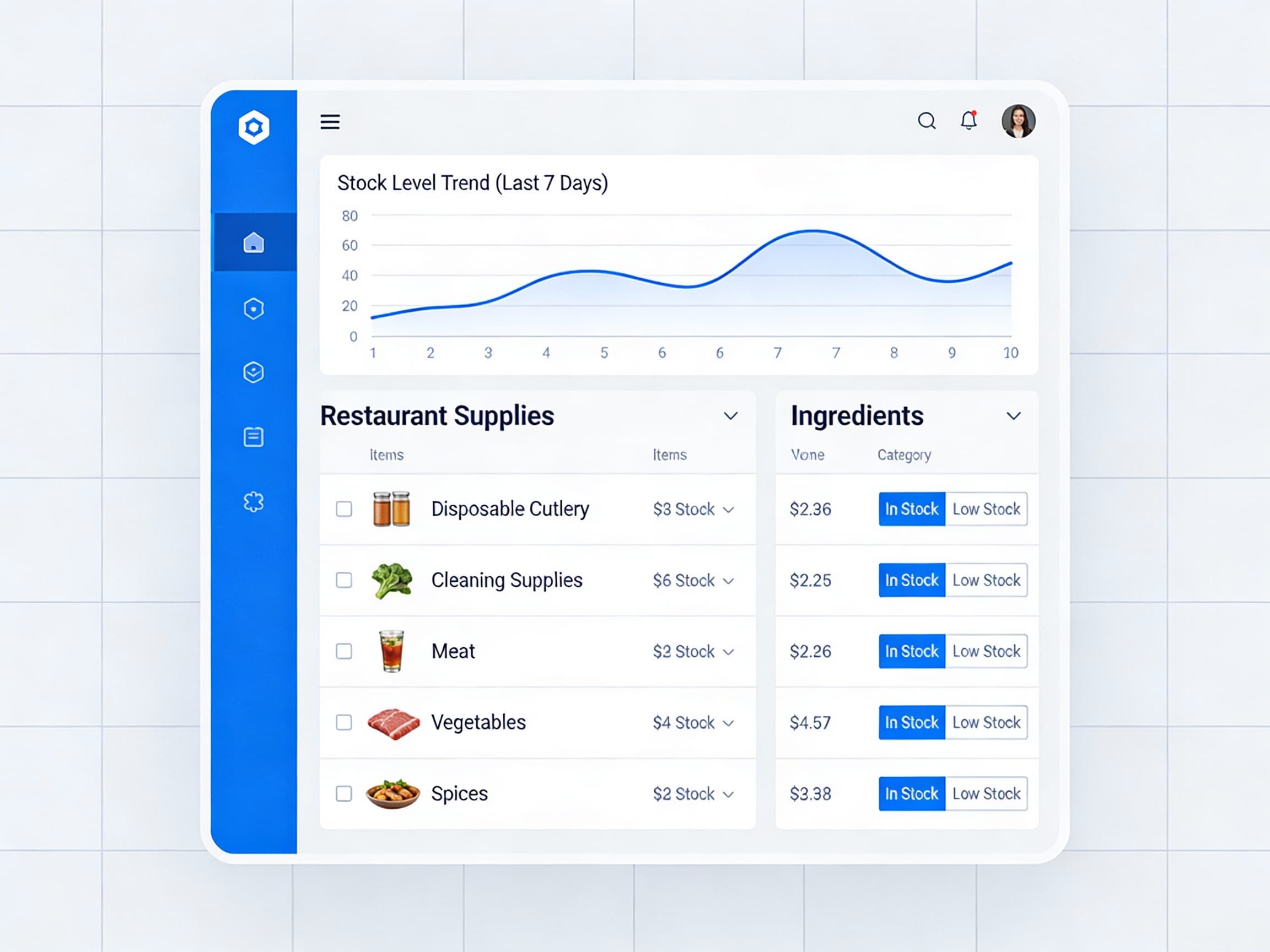
MarketMan earned its following by taming the ordering chaos: digital order guides, supplier price comparisons, inventory counts on a phone, and waste tracking that finally shows where the margin leaks. For an operator juggling five vendors and a walk-in nobody wants to count, that structure is real and worth acknowledging. But MarketMan is purchasing software, not the restaurant's operating system. The subscription price is not the whole story — once you add onboarding, the locations multiplier, and the POS, ordering, and payments it was never meant to replace, the math changes.
The Numbers That Matter: Order Guides Plus the Stack Underneath
MarketMan economics live in three lines most shoppers price separately and feel together:
- **Per-location subscription for the pieces you actually use** — MarketMan prices per location per month, with tiers depending on whether you run inventory, ordering, waste, and supplier management. The ordering tier is affordable; running the full food-cost picture costs more every month.
- **Onboarding before the first clean count** — quotes typically include a one-time setup line so order guides, units of measure, and supplier catalogs match your kitchen. Budget several hundred to low-thousands per location before the software produces a number you can trust.
- **The POS underneath is still a separate bill** — MarketMan reads your sales data; it does not take the order, run the card, or seat the table. You keep your existing POS (and its bill) and reconcile two systems every week: counts and orders in one dashboard, sales and labor in another.
Ask any vendor for two numbers in writing: the all-in monthly total at your real location count with every module you will actually switch on (not the ordering-only tier alone), and the all-in Year 1 figure including onboarding and training. Compare those — not the per-location headline alone.
Starter Tier: Side by Side
Single location, 3 terminals, 250 orders/month, $10K monthly card revenue, annual billing:
- **Tableside Starter + Ordering — $325/mo, ~$1,350 setup, Year 1 ~$5,250.** Published pricing, no per-cover fee, no per-order fee, no mandatory processing markup — with AI food-cost tracking built into the same stack that already holds your sales, purchasing, and recipes.
- **MarketMan realistic all-in — per-location plan in the low hundreds per month plus onboarding, Year 1 commonly ~$4,000–$8,000+** for inventory and ordering at one location — before the POS, processing, online ordering, loyalty, or review responses enter the picture, and doubling with every location you add.
So the patched-together MarketMan-plus-POS stack lands at or above Tableside — while you still run the restaurant itself on a separate POS, with separate logins, separate support lines, and separate bills. One more dashboard that explains last week's food cost; not one system that prevents next week's.
What Else to Weigh
Purchasing lens vs. one stack. MarketMan counts and orders well; the order-taking, payment, gift-card, and review-response moments arrive as integrations or separate vendors with separate bills. Tableside pairs ordering with the whole operation: POS, ordering, loyalty, gift cards, review responses, AI food-cost tracking, and an AI assistant that acts on all of it — you approve, it publishes — backed by a 90-day guarantee. Software that only watches purchasing leaves the rest of the shift on your team's plate.
Per-location multiplication vs. flat rate. A per-location model bills you more in exactly the months you open location two and three — the moments your margin is thinnest. Tableside's flat monthly rate keeps the math predictable as you grow, so expansion grows revenue, not software bills.
The Year 2 picture. Purchasing subscriptions renew every month at your full location count, and the inventory modules that felt optional in Year 1 become load-bearing by Year 2. Tableside keeps updates done-for-you at the same flat rate, with direct ordering that keeps the guest relationship — and the margin — yours.
Who Should Pick Which?
- **Pick MarketMan** if supplier ordering and inventory counts are the whole job — and you have budgeted the full Year 1 line: the plan with every module you will actually run plus onboarding and training, not the ordering-only tier, on top of a POS you are happy to keep.
- **Pick Tableside** if you want one stack — POS, ordering, loyalty, gift cards, review responses, AI food-cost tracking, and AI updates — with published pricing at $325/month flat, where one saved food-cost surprise a month pays for it.
Next Steps
Add up your monthly MarketMan quote with every module plus onboarding — then add the POS underneath and ask what purchasing software actually costs all-in. If the total surprises you, request a demo and we will walk through the Tableside equivalent line by line — no per-cover fee, no per-order fee, no mandatory processing markup.